






![Moshe Ninio, Shepherds King [side piece] , 1990](https://static-assets.artlogic.net/w_2400,h_2400,c_limit,f_auto,fl_lossy,q_auto/artlogicstorage/dvirgallery/images/view/12d03abac972c89f93c91c89766b5687j/dvirgallery.jpg)


-
-
-
-
Nelly Agassi
Nelly Agassi’s work process is full of obsessive, repetitive, sisyphean actions, which function as a gripping point, as a sole possibility, as a connection to reality, to safe ground. Her work represents an important and fascinating transition in the feminist thinking and practice of the nineties, a transition from a declared engagement with feminism to an existent engagement with femininity. This is, to a large extent, a post-feminist stage, which entails an engagement with the private and the intimate, not from the starting-point of social immobility or of weakness, but from a starting-point of privilege and of choice. Agassi’s works do echo the traditional, domestic, women’s crafts – embroidery, sewing, knitting – but her use of these materials is not conventional, certainly not functional, and accumulates a different resonance that stems from the sober awareness of the moment of choice. -
-

-
-
Yossi Breger
Egg, Cucumber and Fig, Gordon Street, Tel Aviv, 2009inkjet print on archival paper
20 x 30cm
unique -
Yossi Breger
Plate on a Chair, Rome, 2010inkjet print on archival paper
43 x 63 cm
unique
-
-
-
Mircea Cantor
Best known for his evocative, metaphorical videos and mixed- media installations, Romanian artist Mircea Cantor makes work reflective of a broad worldview that is at once optimistic and trenchantly critical. In his works, he examines competing ideologies, war, displacement, the self and the other, and multivalence. Keenly aware of the multitude of meanings that a word or an object can contain, he deliberately mixes materials and uses language playfully, producing poignant, challenging works that defy neat categorization. He also refuses to be neatly defined, as he explains: “We know who we are, so why not go deeper? Let’s stand for something other than our nationality. [. . .] [My] objects speak of the great openness in which we can live today, beyond national categories.” -
-
-
-
-
-
-
-
Sigalit Landau
In this new video of Sigalit Landau, we see an island of salt floating on the Dead Sea. In reality, it's a piece that was once on the coast and mysteriously detached itself from the land, much like nature's own ways.
The island-piece is shaped like a well, which Sigalit filled with ecological red paint. Her niece, dressed in a white gown, walks in circles on the island, while a drone circles it in the opposite direction, creating the illusion of perpetual motion. While the video is new, it has already become iconic, referencing both the artist's famous salt sculptures as well to her watermelon video.
Sigalit Landau (b. 1969, Jerusalem) is an interdisciplinary artist who works with installation, video, photography, and sculpture. Landau graduated from the Bezalel Academy of Art and Design in Jerusalem in 1994. After several years in Europe and in the United-States, she returned to Tel Aviv where she currently lives and works. She has had many solo exhibitions in major institutions around the world such as the MoMA, Museum of Modern Art, New York City, The Museum der Moderne, Salzburg, Koffler Centre of Fine Arts, Toronto, Maison Hermes in Ginza, Tokyo, Kunsthalle Budapest, MACBA, Barcelona, the Documenta X, Kassel and more. She represented Israel in the Venice Biennial in 1997 and 2011 and her works are part of major collections such as the MoMa, The Brooklyn Museum Centre George Pompidou, Julia Stoschek Collection, Museum der Moderne Salzburg, The Tel Aviv Museum of Art, The Israel Museum, The Jewish Museum, Magasin 3 Stockholm, MACBA, Museu d’Art Contemporani de Barcelona and others.From 2004 the artist begins her series Salt Years. In the desert landscape of the Dead Sea, she plunges various inanimate objects in the waters whose salinity crystallise them. She explores this process with an array of objects such as Shoes (Adam, 2018; Unborn, 2016), coats, dresses but also nooses, crutches and musical instruments (Flute 3, 2020; Wave, 2020). Hints at the absence of a person to whom they belong while becoming living beings. Transformed by the salt which changes their color to a glimmering white and thickens their surfaces with layers of salt, the objects lose all relation to their original purpose and become symbols of this loss. On the backdrop of the Dead Sea where Israel, Palestine and Jordan share a border, these objects are acting as an ‘archeology of the now’, transmuted into analogies of hope, love, and a future coexistence between the three bordering countries. Sigalit Landau’s interest in the body is also present in the Neon heaters, which are part of the series she created using small heaters that were used throughout the 20th century in Israel. The heaters, when connected to electricity create a yearning for warmth as well as casting reddish auras in the surrounding area. Landau introduces a textual aspect to her work by replacing the heating elements with hand crafted neon words bringing notions of intimacy and domesticity, such as “home-sick” in bright pink, red, orange and blue.
Drawing has always been a part of the artist’s language and constitutes a pillar of her practice. Landau implements and experiments with a variety of techniques, from Indian ink (Blood Moon, 2015; Dimdumim, 2015), to markers and acrylic paint (Pot Girl, 2018), from charcoal and watercolors (A Split Night III, 2020) to dyes on canvas (Midnight Sun, 2015). Balancing the monochromatic aspect of Landau’s sculptural work after the consistently white Salt Years, she began to develop in 2020 her series Masks. These oval sculptures, such as Untitled 7 and Untitled 14, of identical shape and size allow Landau to further develop her practice by exploring new materials, specifically plaster of Paris and burlap, on which she applies pigments. A technique requiring rapidity whilst putting emphasis on the intensity of gesture with a performative aspect. -
-
-
-
Hawara Checkpoint series
-
-
-
Moshe Ninio
-
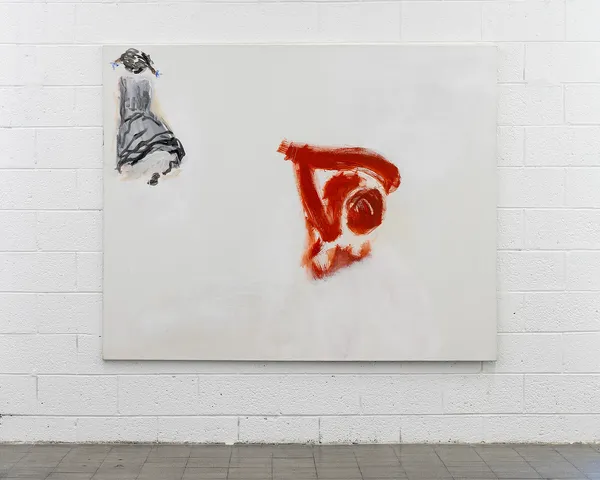
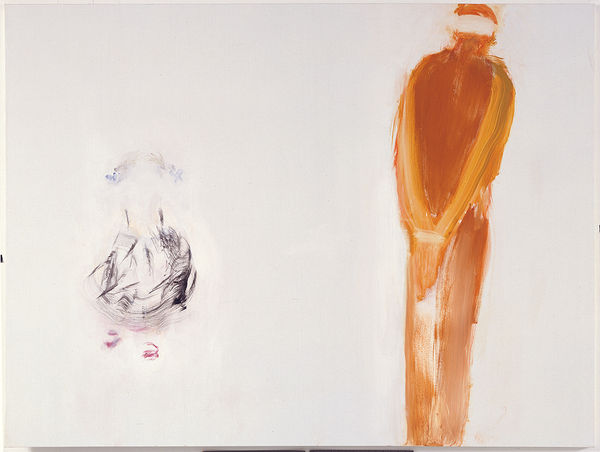
Moshe Ninio’s works are a result of a lengthy maturation and seek to shift the status of the image into another, polemical and spiritual realm. His ‘poor’, latent images, seized with the most trivial banality, inhabit space and define themselves in their relation to other works. The image’s meaning in Ninio’s work is complex and it is undoubtedly the iconic status of the image that predominates.
Ninio exhibited in numerous international exhibitions in different institutions such as NBA, Berlin, Germany; Musée d’art et d’Histoire du Judaïsme, Paris, France ; Santa Monica Museum of Art, Santa Monica, USA; Galerie Chantal Crousel, Paris, France; Dvir Gallery, Tel Aviv, Israel; The Petah Tikva Museum of Art, Petah Tikva, Israel; Centre Pompidou - Musée National d´Art Moderne, Paris, France; Centre de l’image contemporaine (Montreal); Haifa Museum of Art, Haifa, Israel; International Biennial of contemporary Art, Jerusalem, Israel; Tel Aviv Museum of Art, Tel Aviv, Israel. Ninio had numerous solo exhibitions. Among others, he exhibited in Musée d’art et d’Histoire du Judaïsme (Paris), Santa Monica Museum of Art (Santa Monica, CA), S.M.A.K. (Ghent), FRAC Languedoc-Roussillon (Montpellier) and the Israel Museum. His works are in the permanent collection of the Musée d’art et d’Histoire du Judaïsme (Paris) and the Tel Aviv Museum of Art.
-
-
-
-
-
‘Work on Felt’ is an ongoing series of work where raw industrial felt is transformed into modifiable stringed instruments. Through the addition of carbon fiber, piano strings and guitar tuning pegs, the felt pieces gain new features that contradict their natural character. One is immediately confronted with their minimal design and then given a chance to directly engage the work itself by plucking the strings, creating sounds from them. Tightening or loosening the strings changes the degree of the bowing of the sculptures and the sound they make. The transformative nature of the work is such that the appearance of the sculptures, their erectness or flatness, directly corresponds to the pitch they produce.
-
-
-
-
-
-
EGGSHELL ON PALM
DEC 9, 2023 – JAN 13, 2024NELLY Agassi, MIRCEA CANTOR,
LATIFA ECHAKHCH, SIGALIT LANDAU, YUDITH LEVIN,
MOSHE Ninio, Ariel Schlesinger,
Naama Tsabar, Bri Williams